White vs Black Bow Hair: What’s the Difference and When Should You Use Each?
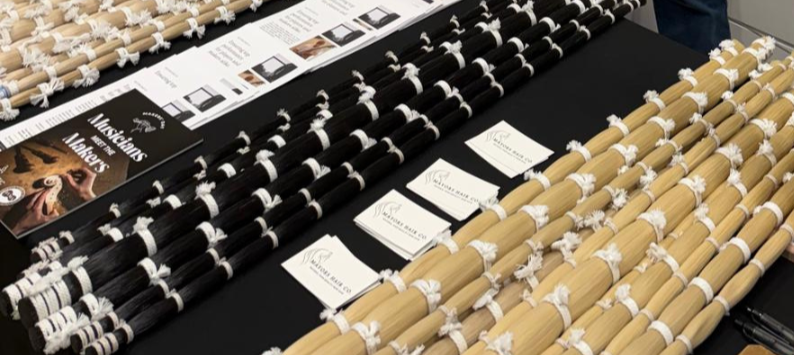
Bow hair is not one-size-fits-all. While most musicians are familiar with traditional white horsehair, black bow hair is also widely used in certain playing styles and instruments.
Understanding the differences between them can help players and rehairers make more informed choices based on performance needs rather than assumption or habit.
What Is White Bow Hair?
White bow hair is the most commonly used type in violin, viola, cello, and general orchestral applications.
It is typically selected for its balance, responsiveness, and versatility.
White hair tends to offer:
Smooth articulation
Even response across the strings
Broad suitability for different playing styles
Because of its neutrality, it is often considered the standard choice for general rehairing work.
What Is Black Bow Hair?
Black bow hair is generally coarser and slightly thicker in texture compared to white hair.
This gives it different playing characteristics, including increased grip on the string.
It is often used for:
Double bass bows
Players seeking more bite or grip
Certain stylistic or tonal preferences
The increased texture can make black hair feel more powerful or assertive in response.
Key Differences in Performance
While both types of hair come from the same source material, differences in grading and texture influence how the bow behaves.
Grip and Bite
Black hair generally provides more grip on the string, which can be beneficial for lower instruments or stronger articulation.
White hair offers a smoother, more balanced feel suited to a wide range of instruments and repertoire.
Response
White hair tends to respond evenly across dynamic ranges.
Black hair can feel more immediate in attack, particularly in lower registers.
Versatility
White hair is widely used due to its adaptability.
Black hair is more specialised and often selected for specific applications.
Is One Better Than the Other?
Neither type is objectively better.
The choice depends on:
Instrument type
Playing style
Desired response
Personal preference
Professional rehairers typically select hair based on the requirements of the instrument and player rather than a fixed rule.
What About Mixed or Salt-and-Pepper Hair?
Some bows use a blend of black and white hair to balance grip and smoothness.
This can provide a middle ground depending on how the hair is selected and installed.
Choosing the Right Hair for Rehairing
For professionals, consistency and expected performance outcomes are key.
Factors such as:
Instrument type
Client requirements
Playing environment
all influence selection.
Final Thoughts
White and black bow hair both have their place in professional rehairing.
Understanding the differences helps ensure better decisions and better outcomes for both players and technicians.
At Mayors Hair Co, we supply hair suited to a range of professional applications, helping rehairers and workshops choose the right material for the job.